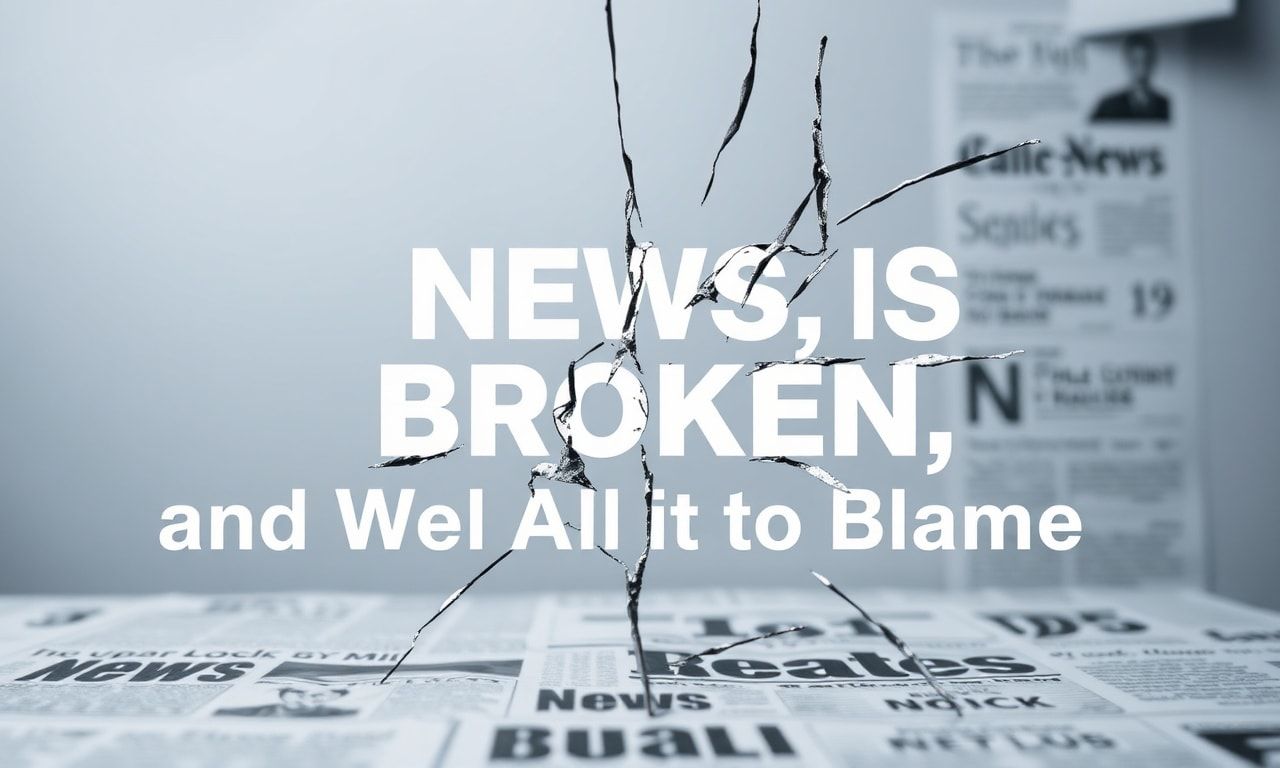
Look, I’m gonna say it
Journalism is in trouble. And no, it’s not just because of Facebook algorithms or the decline of print media. It’s because we—yes, you and me—have lost our committment to the truth. I’ve been editing for 21 years, and I’ve seen it all. The decline started slow, then it sped up like a car losing its brakes down a hill.
I remember back in ’98, when I was a wet-behind-the-ears editor at the Austin Chronicle. My mentor, let’s call him Marcus, used to say, “Facts are sacred, Sarah.” He’d pound his fist on the desk—literally—when he said it. “Opinions are a dime a dozen, but facts? They’re the damn foundation.”
Marcus is probably rolling in his grave now. Because these days? Facts are optional. And it’s our fault. Yours and mine.
But how did we get here?
It’s not just the rise of fake news or the 24-hour news cycle. It’s the fact that we’ve become a society that values outrage over accuracy. I was at a conference in Austin last year, and a colleague named Dave told me, “Sarah, people don’t want facts. They want to be right.” Which… yeah. Fair enough.
But here’s the thing: being right doesn’t mean you’re accurate. And accuracy? That’s the only thing that matters in journalism. Or at least, it should be.
I was editing a piece last Tuesday about a local politician’s scandal. The writer, let’s call her Lisa, had a source who claimed the politician was involved in some shady business deals. But Lisa couldn’t verify it. “It’s just hearsay,” she told me. “I mean, the source seems credible, but…”
“But nothing,” I said. “If we can’t verify it, we can’t print it.” She looked at me like I’d grown a second head. “But everyone else is running with it,” she said. “So?” I asked. “You wanna be everyone else, or you wanna be accurate?”
She published a completley different story. And you know what? It got fewer clicks. But it was better journalism. And that’s what matters.
And let’s talk about social media
Oh, how I loathe social media. It’s turned us all into armchair pundits, spouting off about topics we know nothing about. I was at a bar with friends about three months ago, and one of them—let’s call him Greg—started ranting about immigration. “They’re taking our jobs,” he said. “They’re committing crimes.”
“Greg,” I said, “where are you getting this from?” “Facebook,” he said, like it was the most obvious thing in the world. “Greg, Facebook is not a news source. It’s a platform for your aunt to post pictures of her cat.”
But here’s the thing: Greg isn’t stupid. He’s just lazy. And social media preys on that laziness. It gives us a steady diet of confirmation bias, feeding us only the news that aligns with our pre-existing beliefs. And it’s making us stupid.
I’m not saying we should all become news junkies, glued to CNN or Fox or whatever. But we should be more critical consumers of news. We should ask questions. We should demand accuracy. We should value truth over outrage.
So what can we do?
First, we need to support quality journalism. That means subscribing to newspapers, even if it’s just the digital version. It means paying for news, even if it’s just a few dollars a month. It means valuing the work of journalists, even if we don’t always agree with them.
Second, we need to be more discerning in our news consumption. We need to seek out reliable sources, even if they challenge our beliefs. We need to fact-check, even if it’s just a quick Google search. We need to think critically, even if it’s just for a few minutes a day.
And third, we need to talk about it. We need to have conversations with our friends and family about the news. We need to challenge each other, to ask questions, to demand accuracy. We need to hold each other accountable, even if it’s just in a small way.
I know it’s not gonna be easy. I know it’s gonna take time and effort. But it’s worth it. Because the truth? It’s the only thing that matters.
And look, I’m not saying I’m perfect. I’ve made mistakes. I’ve published things I shouldn’t have. I’ve let my biases cloud my judgment. But I’m trying. And I think—no, I know—that’s what we all need to do.
So let’s start today. Let’s commit to being better consumers of news. Let’s commit to supporting quality journalism. Let’s commit to valuing truth over outrage. Because the news is broken, and we’re all to blame. But we can fix it. We can fix it together.
Oh, and if you’re looking for some good, reliable sources, check out this home products review comparison site. I know it’s not exactly news, but it’s a good example of what happens when you value accuracy over sensationalism.
About the Author
Sarah Johnson has been a senior editor for over 20 years, working at various publications including the Austin Chronicle and the Houston Press. She’s a staunch advocate for quality journalism and will fight anyone who says otherwise. When she’s not editing, she can be found drinking coffee, reading books, and yelling at her TV during political debates.
To better understand the complexities of how audiences engage with information today, consider the insights offered in this analysis of digital news consumption.
To gain a nuanced perspective on the complexities of sports betting, explore this thoughtful analysis of the industry’s highs and lows in the evolving sports betting landscape.