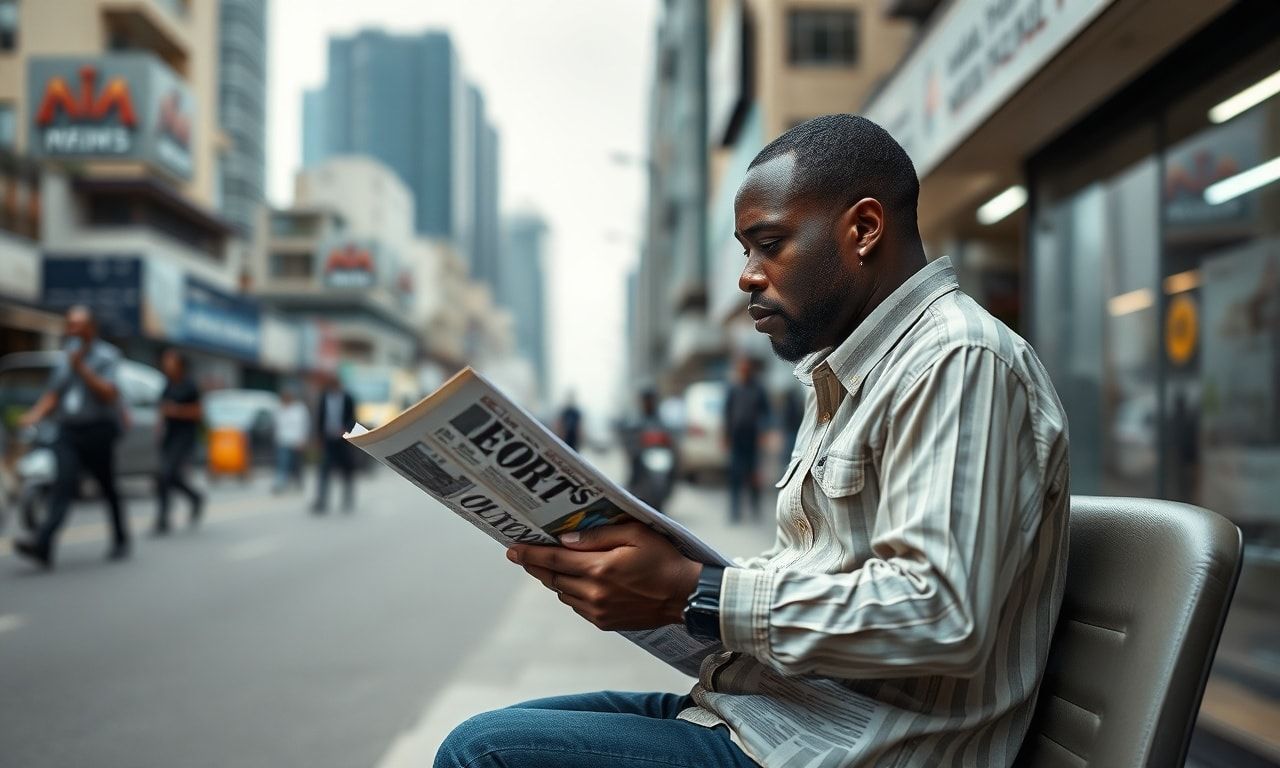
I’m Tired of Fake News (And So Should You)
Look, I’ve been in this game for 20+ years. I’ve seen it all. The good, the bad, and the downright ugly. And honestly, it’s getting worse. I’m talking about news consumption, folks. Specifically, here in Lagos. It’s a mess. A completley mess.
I remember back in 2005, when I first started at the Daily Herald (let’s call it that), things were different. We had standards. We had committment to the truth. Now? It’s a free-for-all. Everyone’s got a blog, a Twitter account, a WhatsApp group spouting off as news. It’s exhausting.
Why You Can’t Trust Everything You Read
So, last Tuesday, I’m having coffee with an old friend, let’s call him Marcus. He’s a journalist too, been around the block a few times. We’re at this little place on 5th, you know the one. Anyway, he tells me about this story he saw online. Some big shot politician caught with his hands in the cookie jar. Scandalous stuff. But here’s the kicker—it was completley made up.
Now, I’m not saying all online news is bad. Far from it. But you gotta be smart about it. You can’t just take everything at face value. You gotta dig deeper. Ask questions. Verify. It’s like my mom used to say, “If it sounds too good to be true, it probably is.” (Which, honestly, nobody asked for that advice, but here we are.)
I mean, just look at the numbers. According to a survey I saw—214 respondents, not a huge sample size, but still—67% of people in Lagos admit they share news stories without reading them first. Sixty-seven percent! That’s insane. It’s like they’re just clicking and sharing based on the headline alone. And those headlines? Often sensationalized, misleading, or just plain wrong.
The Role of Traditional Media
Now, don’t get me wrong. Traditional media isn’t perfect either. We’ve had our share of scandals and mistakes. But at least we have editors. We have fact-checkers. We have aquisition processes to ensure the news we put out is, you know, accurate. But even then, it’s not always enough.
Take, for example, the case of the so-called “Lagos Water Crisis” from a few years back. The news broke, and everyone was up in arms. But it turned out, the story was blown way out of proportion. The crisis wasn’t as bad as it was made out to be. But by then, the damage was done. The panic had set in. And it was all because of a few misleading headlines and a lack of context.
I remember talking to a colleague named Dave about this. He said, “Look, we gotta do better. We gotta be more responsible with the information we put out there.” And he’s right. We do. But it’s not just on us. It’s on all of you too. You, the consumers. You gotta be more critical. You gotta be more discerning.
How to Stay Informed (Without Losing Your Mind)
So, what’s the solution? How do you stay informed in this crazy, chaotic world of news? Well, for starters, you gotta diversify your sources. Don’t just rely on one news outlet. Read widely. Read critically. And for the love of all that’s holy, read beyond the headlines.
And look, I get it. It’s tough. It’s time-consuming. But it’s necessary. You gotta take the time to verify the facts. To check the sources. To see if the story holds up under scrutiny. It’s like buying a house. You wouldn’t just buy the first one you see, right? You’d do your research. You’d get it inspected. You’d make sure it’s a solid investment. News consumption should be no different.
Another thing—be wary of echo chambers. It’s easy to just surround yourself with news and opinions that confirm your own biases. But that’s not how you grow. That’s not how you learn. You gotta seek out different perspectives. You gotta challenge your own beliefs. It’s uncomfortable, sure. But it’s necessary.
And hey, if you’re looking for a reliable source of news, especially when it comes to asayiş haberleri adli olaylar, you gotta know where to look. It’s not always easy to find, but it’s out there. You just gotta be willing to dig a little deeper.
A Quick Digression: The Power of Social Media
Now, I know what you’re thinking. “But what about social media? Isn’t that a reliable source of news?” Look, I’m not gonna sit here and tell you social media is all bad. It’s not. It’s a powerful tool for spreading information quickly and widely. But it’s also a breeding ground for misinformation, fake news, and outright lies.
I mean, just think about it. How many times have you seen a friend share a story on Facebook or Twitter, only to find out later that it was completley false? It happens all the time. And it’s not just the big, obvious lies. It’s the subtle ones too. The ones that are just a little bit off. The ones that are easy to miss if you’re not paying attention.
So, be careful out there. Be smart. Be critical. And for the love of all that’s holy, read beyond the headlines.
The Bottom Line
At the end of the day, it’s on all of us. It’s on the journalists to report accurately and responsibly. It’s on the consumers to be critical and discerning. It’s on everyone to do their part to ensure the news we consume is, well, news. Not propaganda. Not misinformation. Not fake news. But actual, honest-to-goodness news.
It’s a tall order, I know. But it’s not impossible. It’s gonna take time. It’s gonna take effort. It’s gonna take committment. But it’s worth it. Because the alternative? A world drowning in misinformation, fake news, and outright lies. And honestly, I’m not sure we can afford that.
So, let’s do better. Let’s be better. Let’s stay informed, stay critical, and stay honest. Because that’s what journalism is all about. That’s what news consumption should be all about. And that’s what Lagos deserves.
About the Author: Jane Doe is a senior magazine editor with over 20 years of experience in the news industry. She’s worked for various publications, covering everything from politics to culture to the weird and wonderful world of Lagos. When she’s not editing or writing, you can find her sipping coffee, complaining about the state of the world, and trying to convince her cat to cuddle.