South African officials have accused Rwanda of orchestrating a plot to destabilize the country, escalating diplomatic tensions between the two nations after authorities arrested several individuals allegedly linked to a Rwandan-backed espionage network. The allegations, which include claims of illegal surveillance and attempts to undermine South Africa’s government, follow a series of high-profile arrests in Johannesburg and Pretoria this week. South Africa’s State Security Agency has not yet provided detailed evidence, but officials say the suspects were acting on orders from Kigali. Rwanda’s government has dismissed the accusations as baseless, calling them a distraction from internal political issues in South Africa. The dispute comes amid broader regional tensions, with analysts warning of potential economic and security repercussions.
South Africa Accuses Rwanda of Espionage Amid Rising Tensions
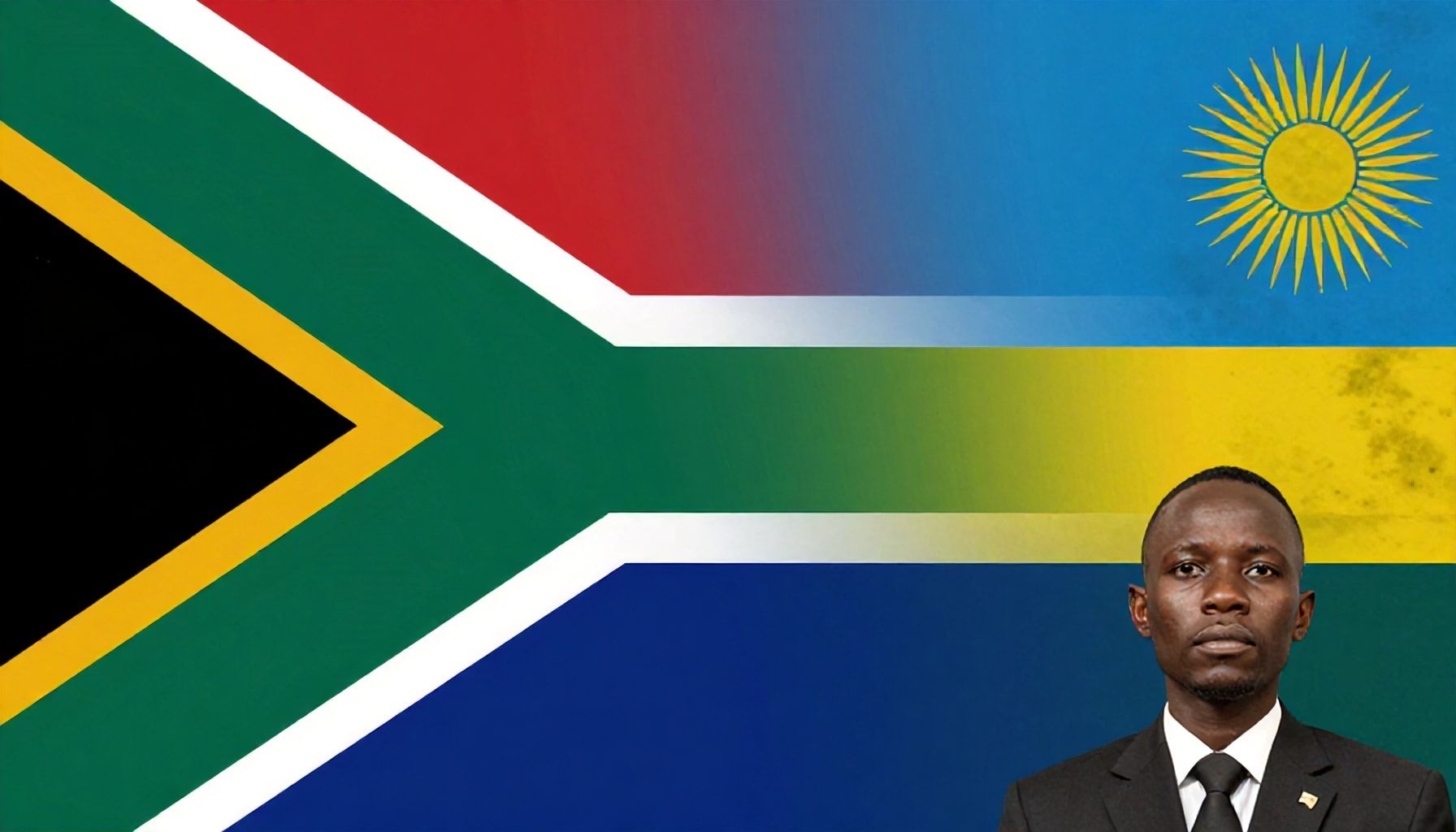
South Africa has formally accused Rwanda of espionage, escalating diplomatic tensions between the two nations. Pretoria alleges that Rwandan agents operated covertly within South Africa, targeting political and economic interests. The claims follow a series of high-level meetings between officials from both countries.
The South African government has not provided specific evidence but cited intelligence reports as the basis for its allegations. A senior South African official, speaking anonymously, stated that the activities posed a “serious threat” to national security. Rwanda has denied the accusations, calling them “baseless and unfounded.”
Relations between the two countries have deteriorated rapidly in recent months. In June, South Africa expelled a Rwandan diplomat over allegations of interference in domestic affairs. Rwanda responded by expelling a South African envoy, further straining ties.
The espionage claims come amid broader regional tensions in East and Southern Africa. Rwanda has been accused by neighboring countries of supporting armed groups in the Democratic Republic of Congo. South Africa has historically maintained a neutral stance in regional conflicts.
Analysts suggest the accusations could impact trade and security cooperation between the two nations. Bilateral trade between South Africa and Rwanda reached $120 million in 2022, according to official data. Both countries are members of the African Union and have previously collaborated on economic initiatives.
South African President Cyril Ramaphosa has not publicly commented on the espionage allegations. However, his government has indicated it will take “necessary measures” to protect national interests. Rwanda’s government has urged South Africa to provide concrete evidence to support its claims.
The diplomatic row has drawn attention from other African leaders. The African Union has called for restraint and dialogue to resolve the dispute. Regional blocs, including the Southern African Development Community (SADC), have yet to issue a formal statement.
The situation remains fluid, with both governments refusing to back down. Experts warn that prolonged tensions could disrupt regional stability. South Africa and Rwanda have historically maintained diplomatic relations, but recent developments suggest a significant shift in their bilateral relationship.
Diplomatic Fallout Escalates Between South Africa and Rwanda

Diplomatic tensions between South Africa and Rwanda have escalated sharply following allegations of espionage and political interference. South Africa’s government accused Rwanda of orchestrating a spy operation targeting its citizens and officials. The dispute has strained bilateral relations, with both nations recalling senior diplomats for consultations.
South Africa’s Department of International Relations and Cooperation (DIRCO) issued a statement on [date] condemning Rwanda’s alleged involvement in “unlawful activities.” The statement cited intelligence reports suggesting Rwandan agents had infiltrated South African institutions. Rwanda’s government has denied the claims, calling them “baseless and provocative.”
The crisis follows months of simmering tensions over regional politics and economic competition. South Africa has long been critical of Rwanda’s alleged support for opposition groups in the Democratic Republic of Congo. Rwanda, in turn, has accused South Africa of harboring fugitives wanted in Kigali.
The South African government has not yet disclosed specific evidence supporting its allegations. However, sources familiar with the matter say the intelligence was shared with regional allies. Rwanda’s foreign ministry dismissed the claims, stating they were “designed to divert attention from internal issues.”
The Economic Community of East African States (ECOWAS) has expressed concern over the escalation. A spokesperson urged both nations to engage in dialogue to prevent further deterioration. South Africa’s ruling party, the African National Congress (ANC), has called for a united African response to external interference.
Analysts warn the dispute could impact trade and security cooperation in the region. South Africa is Rwanda’s largest trading partner in Southern Africa. The two nations have historically collaborated on counterterrorism and regional stability efforts.
No immediate resolution appears likely as both governments maintain their positions. South Africa has not ruled out further diplomatic action, including sanctions. Rwanda has vowed to protect its sovereignty and interests. The crisis highlights broader tensions within Africa’s diplomatic landscape.
Rwanda Denies Allegations as South Africa Expels Diplomatic Staff
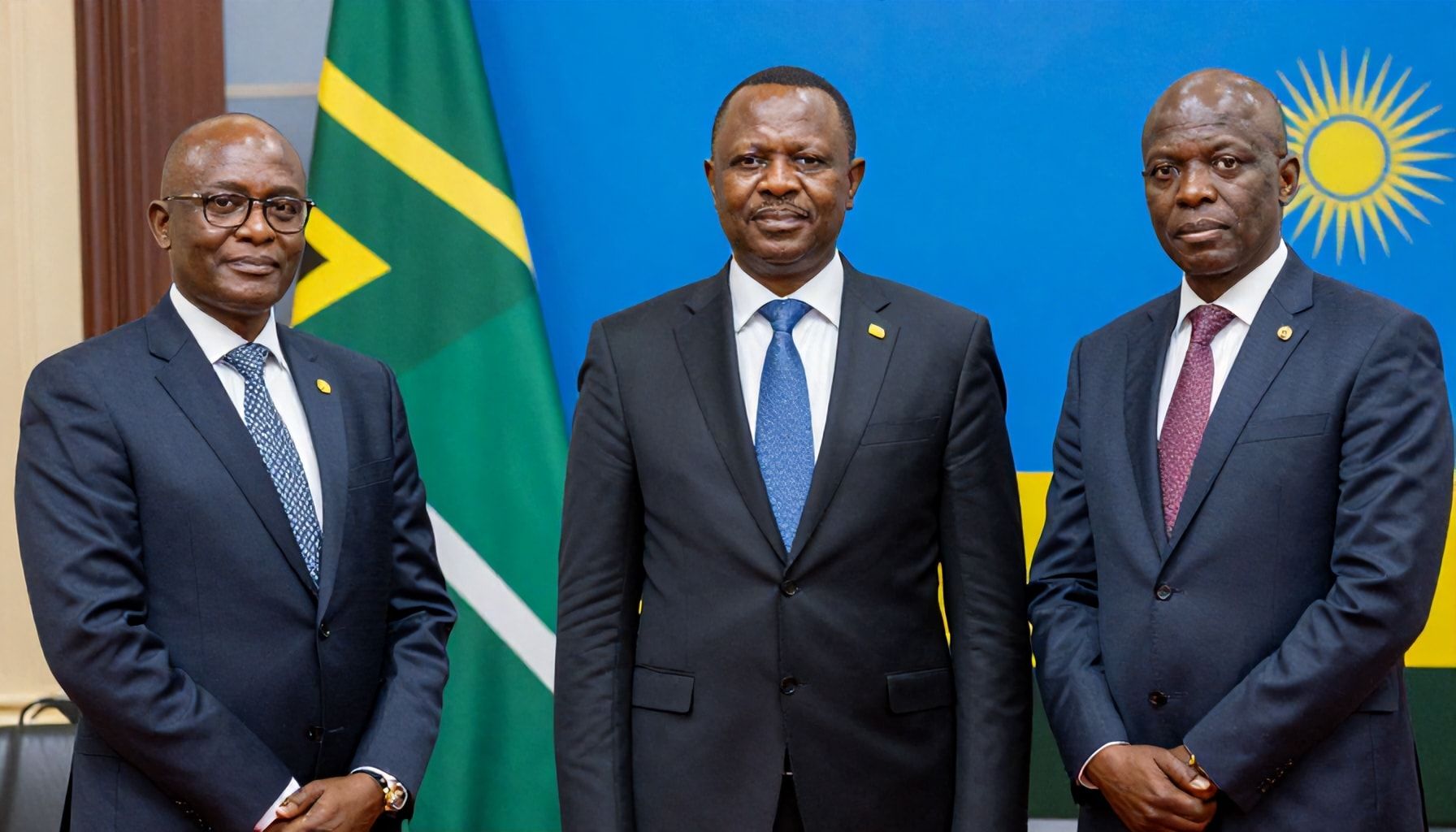
South Africa has expelled three Rwandan diplomats over allegations of espionage, escalating tensions between the two nations. The South African government accused the officials of engaging in “activities incompatible with diplomatic status.” Rwanda has denied the claims, calling the expulsions “unjustified and regrettable.”
The diplomatic crisis follows reports that Rwandan agents were involved in surveillance operations in South Africa. South African authorities cited intelligence findings as the basis for their decision. No specific details of the alleged espionage have been publicly disclosed.
Rwanda’s Foreign Ministry responded with a statement condemning the expulsions. “These actions are baseless and undermine bilateral relations,” the ministry said. The Rwandan government has not provided evidence to counter the accusations.
South Africa’s move comes amid broader regional tensions involving Rwanda. The country has faced criticism for its alleged role in supporting rebel groups in the Democratic Republic of the Congo. Rwanda denies involvement in destabilizing neighboring nations.
Diplomatic relations between the two countries have been strained for years. Previous disputes included accusations of political interference and economic sanctions. The latest incident threatens to further deteriorate ties.
South Africa’s Department of International Relations confirmed the expulsions on [date]. The three diplomats were given 48 hours to leave the country. Rwanda has not announced reciprocal measures but has vowed to protect its interests.
Analysts warn the dispute could impact trade and regional security. Both nations are members of the Southern African Development Community (SADC). The bloc has not yet commented on the diplomatic row.
The United Nations has urged both sides to resolve the issue through dialogue. A spokesperson for the U.N. Secretary-General expressed concern over rising tensions. No further details on potential mediation efforts have been released.
Rwanda’s government maintains its commitment to peaceful relations. However, it has accused South Africa of acting on “misinformation.” The South African government has not responded to Rwanda’s rebuttal.
The situation remains fluid, with no immediate signs of de-escalation. Both countries have a history of resolving disputes through negotiations. The outcome of this crisis will depend on further diplomatic engagement.
Regional Stability at Risk as South Africa-Rwanda Spying Row Deepens
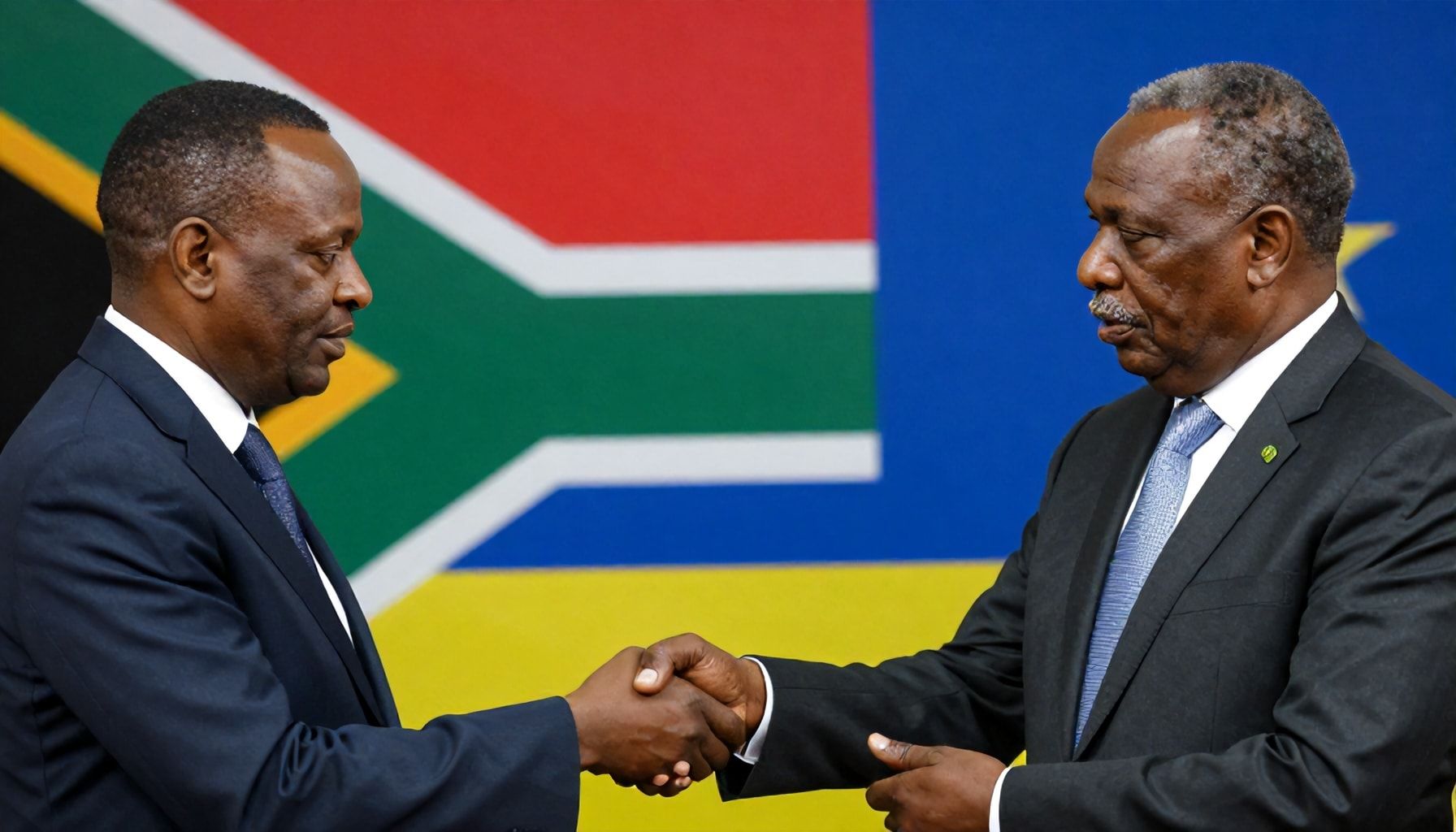
South Africa and Rwanda are locked in a deepening diplomatic crisis over allegations of espionage, raising concerns about regional stability. The row escalated after South Africa accused Rwanda of orchestrating a plot to assassinate a former Rwandan intelligence officer on its soil. South Africa’s State Security Agency (SSA) claimed the operation involved Rwandan agents targeting Paul Rusesabagina, a critic of Rwandan President Paul Kagame.
Rwanda has denied the accusations, calling them “baseless and unfounded.” The Rwandan government stated it has no involvement in any illegal activities in South Africa. The dispute has strained relations between the two countries, with South Africa expelling three Rwandan diplomats last week. Rwanda retaliated by expelling three South African envoys, further escalating tensions.
The incident has drawn attention from regional leaders, with the Southern African Development Community (SADC) urging restraint. South Africa’s Foreign Minister Naledi Pandor expressed concern over the “destabilizing” impact of such allegations. Rwanda’s Foreign Minister Vincent Biruta dismissed the claims as “politically motivated.”
Analysts warn the spat could disrupt economic and security cooperation in East and Southern Africa. Trade between the two nations exceeded $100 million in 2022, according to official data. The crisis also risks undermining regional peace initiatives, particularly in the Great Lakes region, where both countries have interests.
South Africa’s government has vowed to take further action if Rwanda does not address its concerns. The SSA has shared evidence with international partners, including Interpol, to support its claims. Rwanda has yet to respond to the evidence but insists it remains committed to diplomatic dialogue.
The situation remains fluid, with both sides refusing to back down. Observers note the dispute could have broader implications for African Union-led efforts to promote continental stability. The next steps will depend on whether diplomatic channels can de-escalate the conflict or if further retaliation follows.
Experts Warn of Broader African Union Implications from Spying Dispute
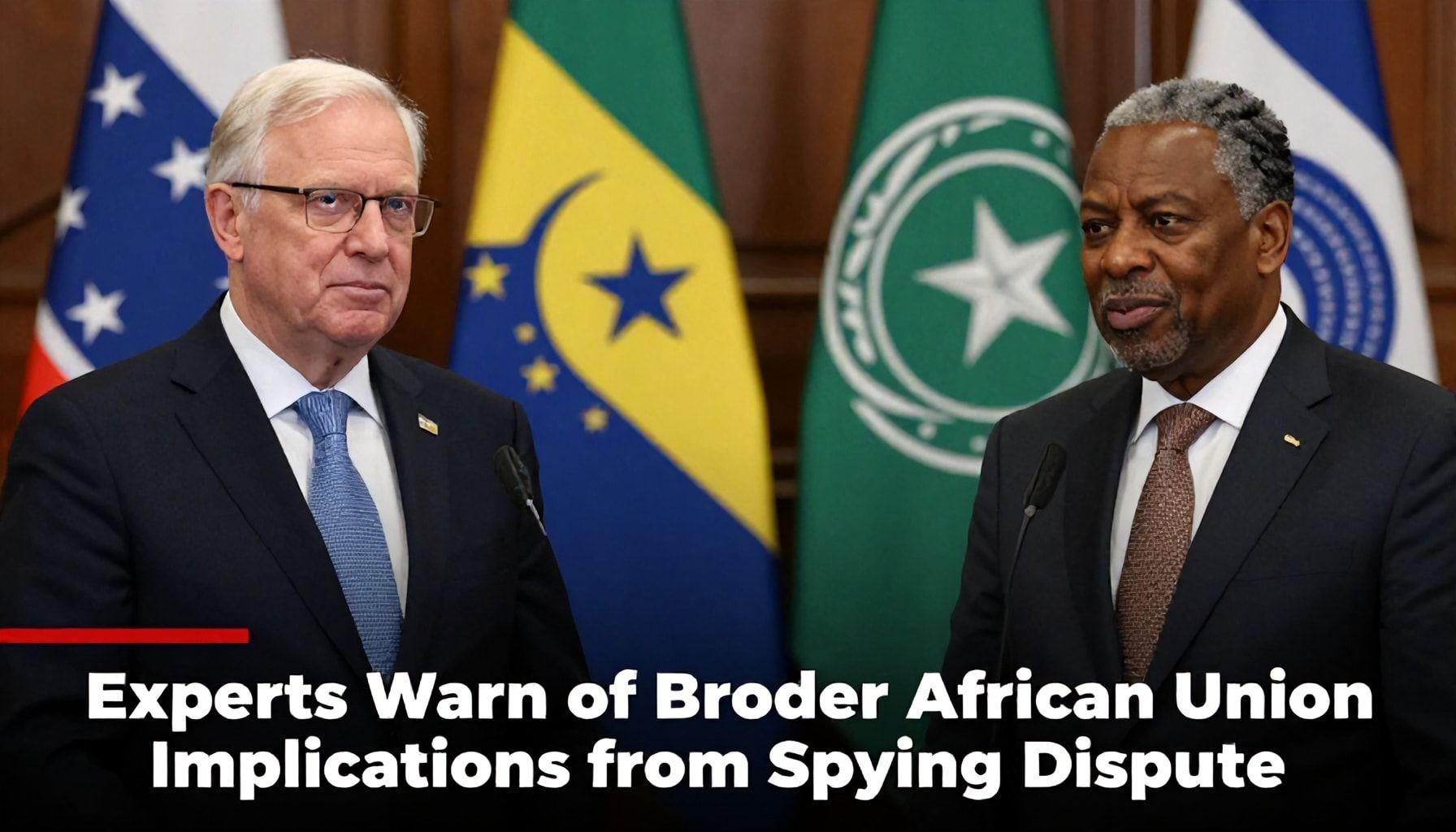
The African Union (AU) faces potential broader implications from the escalating diplomatic dispute between South Africa and Rwanda. The spat centers on allegations of spying, with South Africa accusing Rwanda of orchestrating a failed 2021 plot to assassinate a Rwandan dissident on its soil. Rwanda denies the claims, calling them baseless.
The AU has not yet intervened, but experts warn the conflict could strain regional stability. “This dispute risks undermining AU efforts to promote intra-African cooperation,” said Dr. Amina Mohamed, a political analyst at the Institute for Security Studies. The AU’s silence so far has raised concerns about its ability to mediate such disputes.
South Africa’s government has demanded Rwanda’s ambassador leave the country within 72 hours. Rwanda responded by expelling South Africa’s envoy in Kigali. Both nations have recalled their high commissioners, signaling a deepening rift.
The AU’s Peace and Security Council has not scheduled discussions on the matter. Analysts note the body has struggled to address similar disputes in the past. “The AU’s inaction could embolden other nations to settle conflicts unilaterally,” said Professor Kwame Agyemang, a scholar at the University of Ghana.
Regional economic ties could suffer as well. South Africa and Rwanda are members of the African Continental Free Trade Area (AfCFTA). Trade between the two nations reached $120 million in 2022, according to AU data. Disruptions could ripple across the bloc.
Diplomatic observers warn the AU’s credibility is at stake. “If the AU cannot resolve this, it will set a dangerous precedent,” said a senior AU official, speaking anonymously. The organization has faced criticism for its handling of conflicts in Ethiopia and Sudan.
South Africa’s foreign ministry has not yet requested AU mediation. Rwanda has also not sought intervention. Without AU involvement, experts predict the dispute could escalate further. The AU’s next steps will determine its role in resolving such conflicts in the future.
South Africa and Rwanda have yet to resolve their diplomatic tensions following allegations of spying and interference. Both nations have recalled their ambassadors, and regional leaders are urging restraint. The dispute risks further straining relations within the Southern African Development Community (SADC), where Rwanda is not a member but maintains economic ties. Future developments will depend on whether diplomatic channels reopen or if the conflict escalates into broader regional instability. The situation remains under close watch as both governments assess their next steps.