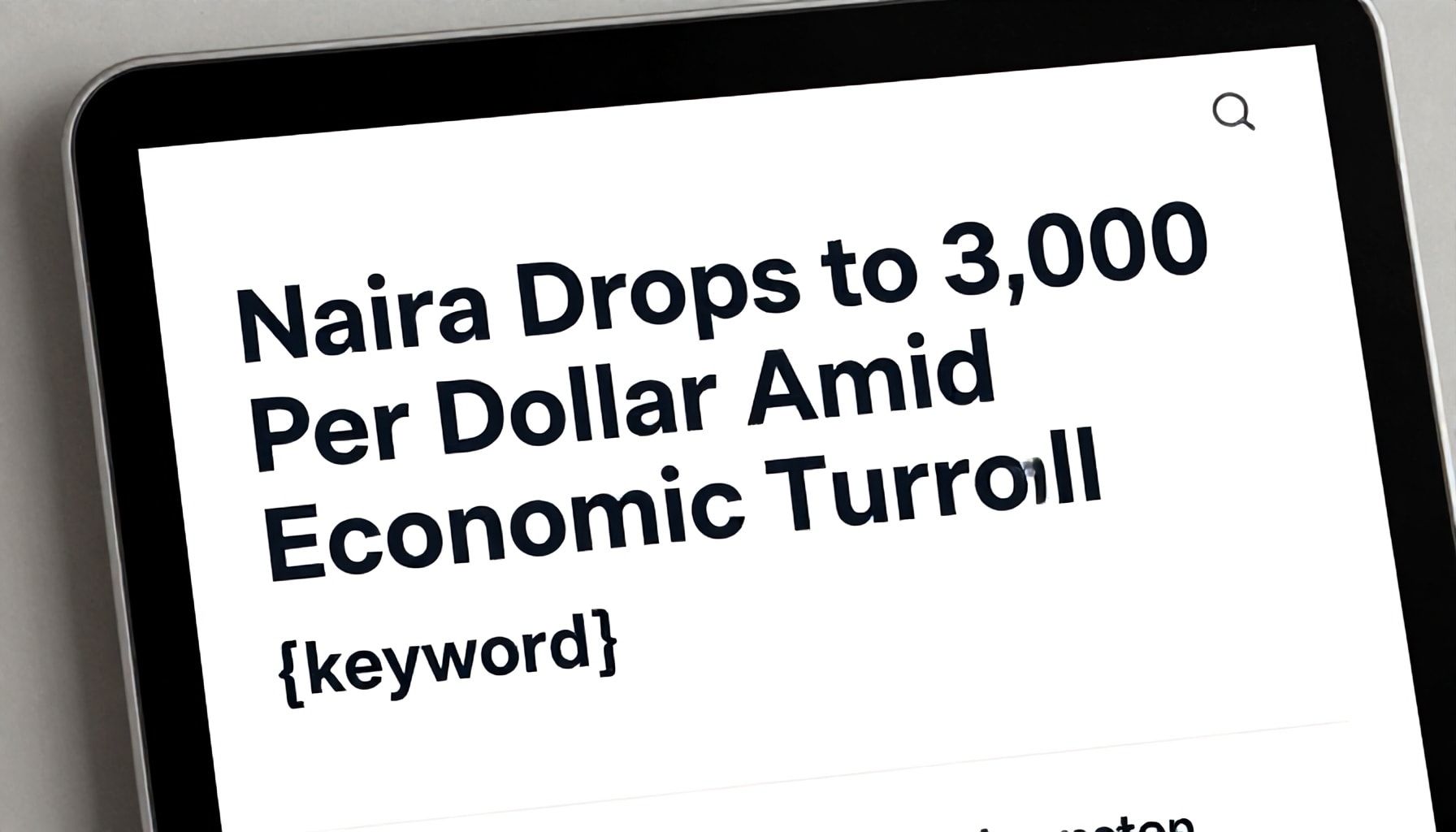
The Nigerian naira plunged to a record low of 3,000 per U.S. dollar on Thursday, deepening economic turmoil as foreign exchange shortages and inflation continue to cripple the country’s currency. The Central Bank of Nigeria (CBN) confirmed the devaluation, marking the naira’s worst-ever decline amid dwindling dollar reserves and rising demand for foreign currency.
The collapse follows months of economic instability, including a fuel subsidy removal that triggered nationwide protests and a 33% inflation rate in May. Analysts warn the crisis could worsen without urgent intervention, as businesses struggle with import costs and ordinary citizens face soaring prices. The CBN has not yet announced measures to stabilize the currency, leaving economists and investors bracing for further volatility.
Naira Plummets to 3,000 Per Dollar Amid Economic Crisis

The Nigerian naira has plummeted to a record low of 3,000 per dollar on the parallel market, deepening the country’s economic crisis. The Central Bank of Nigeria (CBN) has not yet commented on the latest depreciation, which follows months of steady declines.
Economic analysts attribute the sharp drop to dwindling foreign exchange reserves and rising demand for dollars. The CBN’s foreign reserves fell to $33.6 billion in May, down from $34.3 billion in April, according to official data.
Businesses and individuals are struggling to access foreign currency at official rates, forcing many to turn to the black market. “The gap between the official and parallel market rates is now unsustainable,” said financial analyst Tunde Adeoye in an interview with BusinessDay.
The naira’s decline has exacerbated inflation, which hit 33.95% in May, the highest in 27 years. Food prices have surged by 48.5%, worsening living conditions for many Nigerians.
The government has yet to announce measures to stabilize the currency. Some economists suggest a unified exchange rate system could restore confidence, but no policy changes have been confirmed.
The parallel market rate has become the de facto benchmark for many transactions, including imports and school fees. “Until the CBN addresses the supply-side issues, the naira will continue to weaken,” said a trader at a Lagos bureau de change.
The World Bank warned in April that Nigeria’s economic outlook remains fragile due to currency instability. The country’s debt servicing costs have also risen, further straining public finances.
With no immediate relief in sight, analysts predict further volatility in the forex market. The naira’s free fall underscores deeper structural challenges in Nigeria’s economy.
Central Bank Struggles to Stabilize Currency Amid Record Low
The Nigerian naira hit a record low of 3,000 per dollar on the parallel market, deepening economic instability amid dwindling foreign reserves and dwindling investor confidence. The Central Bank of Nigeria (CBN) has struggled to stabilize the currency despite multiple interventions, including currency swaps and interest rate adjustments.
The naira’s devaluation follows weeks of sustained pressure, with traders citing limited dollar liquidity and rising demand for foreign exchange. The CBN’s official exchange rate remains significantly stronger, but the gap between official and black-market rates has widened, fueling speculation and capital flight.
Economic analysts warn that the naira’s decline could worsen inflation, which already stands at 33.69% as of July 2024, according to the National Bureau of Statistics. Higher import costs for essential goods are expected to further strain household budgets and business operations.
The CBN has not yet commented on the latest depreciation, but officials have previously attributed currency volatility to global economic headwinds and speculative trading. Some economists argue that the bank’s restrictive forex policies have exacerbated the crisis by discouraging legitimate dollar inflows.
Parallel market traders report increased demand from importers and individuals seeking dollars for travel and school fees. The scarcity of forex has led to long queues at banks and bureau de change outlets, with many Nigerians resorting to informal channels at inflated rates.
The International Monetary Fund (IMF) has urged Nigeria to adopt more flexible exchange rate policies to restore market confidence. In a statement last month, the IMF noted that artificial exchange rate controls often worsen economic distortions.
Government officials maintain that ongoing reforms, including fuel subsidy removal and fiscal adjustments, will eventually stabilize the economy. However, critics argue that without immediate measures to boost forex supply, the naira’s decline will persist.
The naira’s record low highlights broader challenges, including declining oil revenues and weak industrial output. Without urgent intervention, analysts warn of prolonged economic turbulence and further erosion of purchasing power.
Economic Turmoil Drives Naira to Historic Low Against the Dollar

The Nigerian naira hit a historic low of 3,000 per dollar on the parallel market, marking its steepest decline amid deepening economic instability. The Central Bank of Nigeria (CBN) has not officially commented on the latest exchange rate, but analysts attribute the drop to persistent dollar scarcity and rising demand for foreign currency.
Economic analysts warn that the naira’s depreciation could worsen inflation, already at 33.69% as of July 2024, according to the National Bureau of Statistics (NBS). The CBN’s foreign exchange reserves fell to $33.2 billion as of August 2024, down from $34.5 billion in June, exacerbating liquidity challenges.
The parallel market rate now far exceeds the official exchange rate, which remains around 1,500 naira per dollar. The gap between the official and black-market rates has widened, signaling deepening distrust in the CBN’s ability to stabilize the currency.
Businesses and individuals struggling to access dollars at the official rate are turning to the parallel market, further driving up demand. The CBN’s recent attempts to tighten forex controls have failed to curb the naira’s decline, analysts say.
The International Monetary Fund (IMF) cautioned in a July 2024 report that Nigeria’s economic policies must address structural weaknesses to restore investor confidence. Without intervention, the naira’s freefall may continue, deepening economic hardship for Nigerians.
The naira’s collapse reflects broader economic challenges, including fuel shortages, power outages, and rising unemployment. Economists predict further depreciation if the government does not implement reforms to attract foreign investment and stabilize the forex market.
The CBN has not announced new measures to address the crisis, leaving traders and analysts uncertain about potential interventions. Until policy changes materialize, the naira’s downward trend is expected to persist, analysts warn.
Experts Warn of Worsening Inflation as Naira Hits 3,000 Per Dollar

The naira has depreciated to a record low of 3,000 per dollar on the parallel market, deepening Nigeria’s economic crisis. This marks the worst exchange rate in the currency’s history, surpassing the previous peak of 2,800 naira per dollar in March.
Economic analysts warn that the naira’s freefall could worsen inflation, already at 33.69% as of April 2024. “A weaker naira raises import costs, fueling price hikes across goods and services,” said Dr. Ayo Adepoju, a senior economist at Lagos Business School.
The Central Bank of Nigeria (CBN) has yet to intervene despite the naira’s collapse. Governor Olayemi Cardoso previously stated in February that the bank would prioritize stability over artificial rate adjustments.
Parallel market traders report high demand for dollars amid dwindling foreign reserves. Nigeria’s reserves dropped to $33.2 billion in May, down from $39.2 billion in January, according to CBN data.
Experts urge immediate policy reforms to stabilize the currency. “Without structural changes, the naira will continue its decline,” said Prof. Uche Uwaleke, a finance professor at Nasarawa State University.
The World Bank has also expressed concern, warning that Nigeria’s economic policies could deepen the crisis. In a May report, the bank highlighted the need for fiscal discipline and foreign exchange market reforms.
Businesses and consumers face rising costs as the naira’s depreciation strains household budgets. The National Bureau of Statistics (NBS) reports that food inflation hit 48.5% in April, the highest in over two decades.
The government has not announced measures to address the naira’s decline. Analysts say without intervention, inflation and economic instability will persist. The naira’s record low underscores the urgency of policy action.
Government Urges Calm as Naira Collapse Deepens Financial Uncertainty

The Nigerian naira has plummeted to a record low of 3,000 per dollar on the parallel market, deepening economic uncertainty. The Central Bank of Nigeria (CBN) has yet to officially comment on the latest depreciation. Analysts attribute the slide to persistent dollar shortages and waning investor confidence.
The government has urged citizens to remain calm amid the financial turmoil. Vice President Kashim Shettima assured Nigerians that authorities are working to stabilize the currency. “We recognize the challenges and are taking measures to address them,” he stated in a televised address.
The naira’s decline has intensified inflationary pressures, with prices of essential goods rising sharply. The National Bureau of Statistics (NBS) reported a 34.2% year-on-year inflation rate in May. Economists warn of further economic strain if the trend continues.
Businesses and importers face severe difficulties accessing foreign exchange. The CBN’s official exchange rate remains around 1,500 naira per dollar, creating a widening gap with the black market. Many companies now rely on the parallel market for transactions.
Financial experts call for urgent reforms to restore stability. “The current situation demands decisive action to rebuild confidence,” said Dr. Ayo Teriba of Economic Associates. The government has yet to outline specific steps to address the crisis.
The naira’s collapse has sparked protests in major cities, with citizens demanding accountability. Labor unions have threatened strikes if the economic situation worsens. The government has appealed for patience while implementing solutions.
Analysts note that without immediate intervention, the naira could depreciate further. The International Monetary Fund (IMF) has urged Nigeria to adopt policies that stabilize the currency. The CBN has not indicated any immediate policy changes.
The economic downturn has raised concerns about Nigeria’s ability to service its foreign debt. The country owes over $40 billion in external debt, with repayments due in the coming months. The government insists it remains committed to meeting its obligations.
The naira’s freefall has also affected remittances from Nigerians abroad. The World Bank estimates that remittances could drop by 20% this year. Many families rely on these funds for basic needs.
The situation underscores the need for structural economic reforms. Experts emphasize the importance of diversifying the economy beyond oil. The government has pledged to prioritize economic recovery in its policies.
For now, Nigerians brace for further financial uncertainty. The naira’s collapse highlights the urgent need for solutions to stabilize the economy. The government’s next steps will determine the path forward.
The naira’s collapse to 3,000 per dollar underscores Nigeria’s deepening economic crisis, driven by foreign exchange shortages, inflation, and declining oil revenues. Analysts warn of further depreciation without urgent policy reforms. The Central Bank of Nigeria has yet to intervene, raising concerns over market stability. Meanwhile, businesses and households face rising costs, exacerbating financial strain. Future developments hinge on government measures to stabilize reserves and restore investor confidence. The situation highlights broader challenges in Africa’s largest economy amid global economic headwinds.